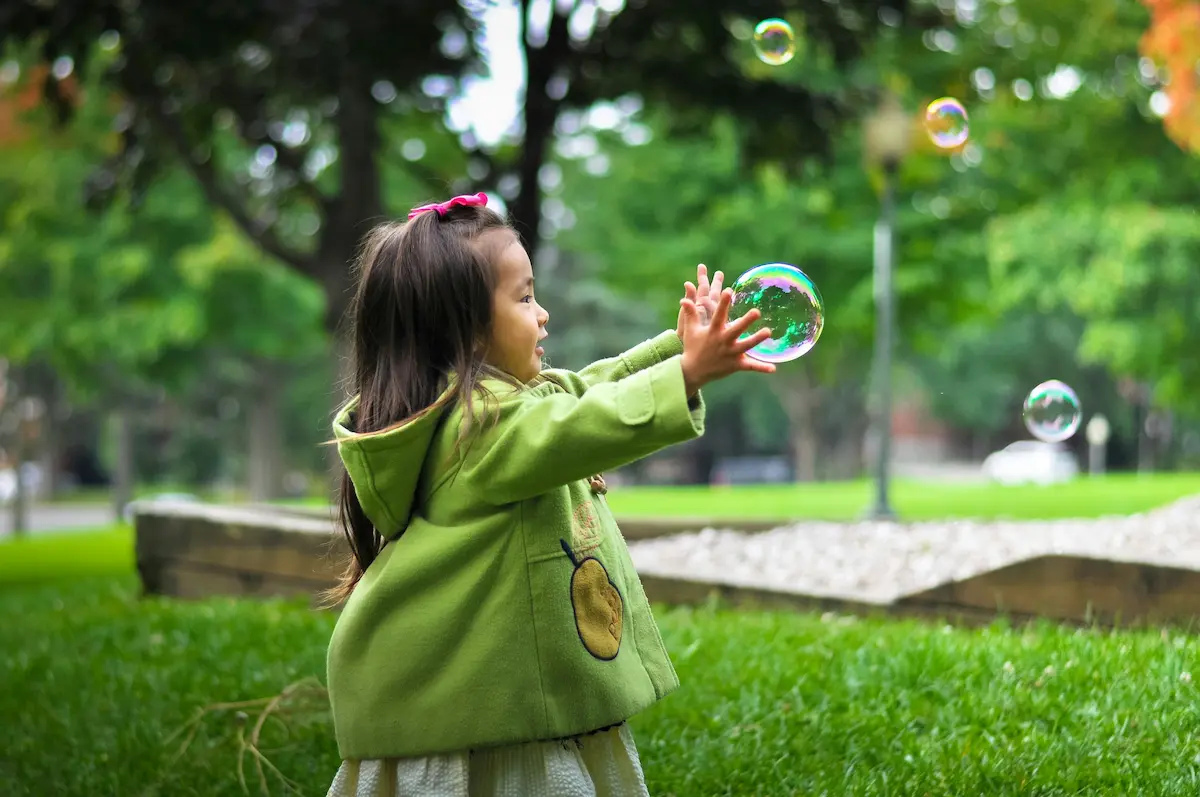
I often admire children—how pure, friendly, open, and without masks or conditioning they are. They truly live in the moment. I remember as a child, waiting for Christmas (of course, for the presents), counting down the days. It felt like forever. Now, I mostly rush through December, and before I know it, the hamster wheel throws me out at the Christmas tree.
Yesterday, I saw a little girl staring at a fountain, completely absorbed in it for what must have been ten minutes. She didn’t want to leave, lost in the beauty of the flowing water. That moment deeply touched me. It reminded me how children can focus, feel, and live so fully in the now. Inspired by this, I want to share what children teach us about living authentically and how to bring more of that magic into our adult lives.
🌟 Why Look to Children for Wisdom?
Children are natural teachers. They remind us of things we once knew but somehow forgot along the way: presence, curiosity, and unconditional joy. By observing children, we can rediscover what children teach us about living authentically—and apply it to our relationships, work, and inner growth.
Let’s explore some of these lessons and see how they can transform our everyday lives.
💡 Lessons from Children
Have you ever seen how children throw themselves completely into whatever they’re doing—whether it’s building a sandcastle, chasing bubbles, or staring at a fountain for minutes without distraction? They don’t hold back, they don’t pretend, and they don’t worry about how they’re perceived. They simply are. This unfiltered way of being is at the core of what children teach us about living authentically.
Let’s explore some key lessons we can bring into our adult lives.
💡 Lesson 1: Live in the Present Moment
Children don’t worry about tomorrow or dwell on yesterday. They immerse themselves fully in play, discovery, and joy. This is one of the most powerful examples of what children teach us about living authentically.
How to practice:
- Try a 5-minute single-focus exercise: pick an object (like your coffee mug or a plant) and observe it without distraction. Notice its color, texture, and shape.
- Next time you’re walking, leave your phone in your pocket and pay attention to the sounds, smells, and colors around you. Feel the ground beneath your feet.
💡 Lesson 2: Approach Life with Curiosity
Children constantly ask “why?”. They see the world as an endless playground of possibilities. Their openness reminds us that curiosity keeps life fresh and helps us stay connected with wonder. This is at the heart of what children teach us about living authentically: never stop asking questions.
How to practice:
- Ask yourself one curious question a day (e.g., “What if I tried this differently?”).
- Break your routine: take a new route home, try a new recipe, or experiment with a hobby you’ve always wanted to explore.
- When faced with a challenge, instead of resisting, approach it with “What can I learn here?”.
💡 Lesson 3: Express Emotions Freely
When children feel joy, they laugh loudly. When they’re sad, they cry without shame. Adults, however, often suppress emotions to appear “strong” or “composed.” Yet, this raw honesty is a vital part of what children teach us about living authentically.
How to practice:
- Journal your feelings each evening—without judgment or the need to fix them.
- Allow yourself to laugh wholeheartedly at something funny. If you need to cry, let the tears come.
- Share your emotions openly with a trusted person instead of bottling them up.
💡 Lesson 4: Find Joy in Simplicity
Children don’t need much to be happy—a bubble, a puddle, or a flower is enough to light up their day. They remind us that joy often lives in the simplest things. This is a precious reminder of what children teach us about living authentically.
How to practice:
- Write down three simple things that made you smile today.
- Create small “pockets of joy” in your day: sip your tea slowly, take a mindful breath, or look at the sky for a few moments.
- Notice the small details in your environment—the rustle of leaves, the warmth of sunlight, or the smell of fresh coffee.
💡 Lesson 5: Connect Authentically
Children greet each other without hesitation, offering kindness without hidden agendas. They don’t overthink relationships or play games. They embody the essence of what children teach us about living authentically: connecting from the heart.
How to practice:
- Offer one genuine compliment each day, without expecting anything in return.
- Practice active listening: instead of planning your reply, focus fully on the other person’s words and emotions.
- Approach people with openness—whether it’s a stranger you smile at or a friend you check in on sincerely.
🌈 Final Words
Children remind us that life isn’t about rushing, but about savoring. If we let them, they can be our greatest teachers of presence, authenticity, and joy.
If you feel called to deepen your journey into self-awareness or relationships, I’d be honored to guide you. You can reach me through timeacoaching.com.
📖 Recommended Reading
The Miracle of Mindfulness – Discover how mindfulness can transform your daily life, helping you stay present and calm.
Japanese Mindfulness Practices for Everyday Life – Learn how simple Japanese traditions can enrich your daily routine with peace and balance.
📚 Recommended Book List
Here are five best-selling books on what children teach us about living authentically:
- The Gifts of Imperfection by Brené Brown – A guide to embracing vulnerability and living wholeheartedly.
- The Power of Now by Eckhart Tolle – A classic on living in the present moment, much like children do.
- Play: How It Shapes the Brain, Opens the Imagination, and Invigorates the Soul by Stuart Brown – An exploration of why play is essential at every age.
- Raising Happiness by Christine Carter – Lessons from positive psychology on cultivating joy, inspired by children.
- The Book of Joy by Dalai Lama & Desmond Tutu – A celebration of joy, simplicity, and presence in everyday life.
💬 Questions for You
👶 What is one thing you’ve learned from observing children?
🌱 How do you bring curiosity into your daily life?
💡 Which of these lessons will you start practicing today?







Leave a Reply