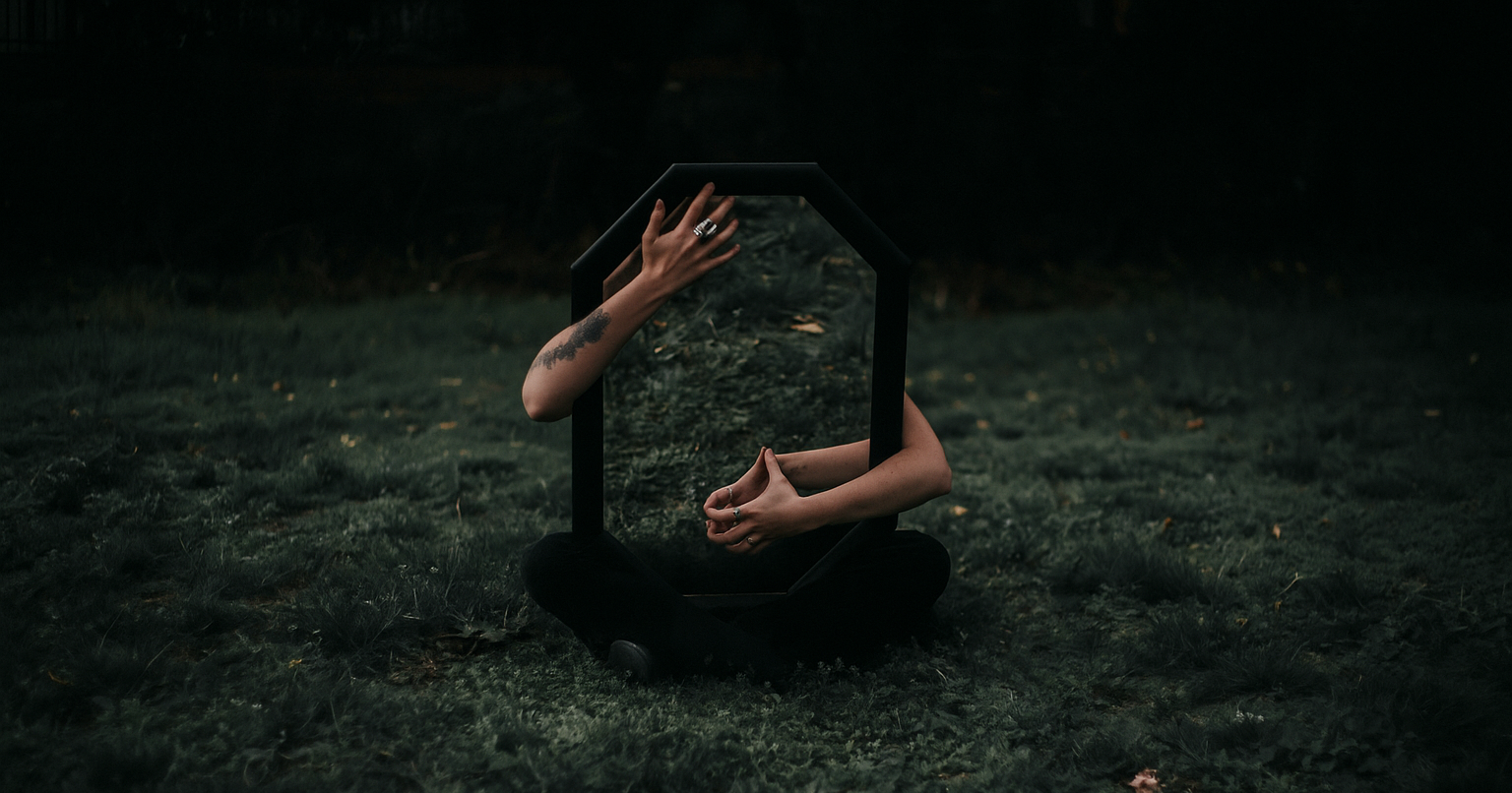
In the past few years, I’ve made a conscious effort to follow my heart and intuition. But to be honest, the path has not always been clear. I often find myself asking: is this desire from a wound or is it intuition? Is this my soul’s true calling, or just an echo of childhood pain still waiting to be healed?
I’ve noticed how much emotions drive us—often more than rational thought. Some people, I believe, have buried their emotions so deeply they can’t access them anymore. But even then, I think those buried feelings are still steering the wheel unconsciously.
This realization sparked a deep curiosity in me: how do we know if we are truly being guided by our intuition, or if an old wound is speaking? How do we tell the difference between soul-led expansion and trauma-led impulse?
Let’s explore this together.
🧠 Intuition vs. Wound: How to Understand the Source
To truly understand whether your desires are rooted in intuition or old pain, it’s helpful to look through the lens of psychology and spiritual wisdom. Carl Jung, the Swiss psychiatrist, spoke often about the power of the unconscious and the “shadow”—the parts of ourselves we repress. According to Jung, unhealed wounds from childhood can manifest as projections, compulsions, and even romantic or career obsessions.
🌀 How Childhood Wounds Mimic Intuition
Our earliest experiences form deep emotional imprints. If you were rejected or neglected as a child, you might unconsciously seek situations that recreate that pattern—hoping, this time, for a different ending. That’s desire born from a wound.
On the other hand, intuition often feels quieter, subtler, and more grounded. It speaks in nudges, not shouts. It’s expansive, not anxious. But if you’re used to chaos, that quiet nudge might feel uncomfortable—or even boring.
🔍 Intuition vs. Trauma: Key Differences
| Wounded Desire | Intuition |
|---|---|
| Feels urgent, obsessive | Feels calm and certain |
| Comes with fear or anxiety | Comes with peace and curiosity |
| Rooted in validation-seeking | Rooted in inner truth |
| Recreates familiar pain | Leads to unfamiliar growth |
💭 Can Trauma Feel Like Intuition?
Sometimes, yes. Unhealed trauma can create emotional reactions that feel incredibly convincing. Fear, longing, or the need for validation may be mistaken for inner guidance because they arise so quickly and intensely.
One of the key differences is that trauma often pushes for immediate action, while intuition usually feels calmer and more grounded. Intuition doesn’t need to prove itself—it quietly invites you forward rather than pulling you through fear or urgency.
Learning to tell the difference takes practice, self-awareness, and compassion. Over time, as emotional wounds heal, intuition often becomes much easier to recognize.
🌱 How to Tell the Difference: A Step-by-Step Healing Path
Understanding whether your desire comes from a place of intuition or an old emotional wound requires presence, honesty, and self-compassion. It’s not about judgment—it’s about getting curious. Healing begins when we slow down enough to observe what truly moves us and why.
1. Ask Yourself These Questions (Self-Inquiry)
Ask yourself:
“What do I hope this desire will give me?”
“Am I chasing something, or am I being gently led toward it?”
If your desire is driven by the need to prove your worth, to be seen, loved, or finally “chosen,” chances are it’s rooted in an old story—a wound still whispering from childhood.
🧠 Example:
Let’s say you feel deeply drawn to becoming a public speaker. You’re imagining the spotlight, the applause, the recognition. Now pause and ask: Is this about sharing my authentic voice—or about finally feeling seen because I was overlooked as a child?
There’s no shame in wanting to be seen. But recognizing the deeper motivation helps us choose whether to follow the desire as it is, or heal first before moving forward.
🎯 Try journaling prompts like:
What am I hoping this will fix in me?
Who am I trying to impress or prove something to?
What would I do differently if I already felt whole?
2. Notice Your Body’s Response (Somatic Check-In)
In our fast-paced world, we often confuse urgency with truth. But intuition is rarely urgent. It feels calm, grounded, and clear—even if it points to something big and scary.
Wounded desire, in contrast, usually comes with tension, restlessness, and emotional noise.
🧡 Embodied Example:
You’re considering moving to a new city for a relationship. Take a deep breath, close your eyes, and ask:
When I imagine this, does my chest tighten or expand?
If your body feels clenched or uneasy—even if your mind says “this is a good idea”—there might be a deeper fear at play.
On the other hand, if you feel soft, open, and present when visualizing the move, it could be intuition.
📝 Somatic Practices to Try:
- Body scanning: Lie down and scan your body slowly from head to toe. Notice where tension arises when you think about your desire.
- Movement meditation: Put on calming music and let your body move intuitively. Often, your body knows before your mind does.
- Heart breathing: Place your hand over your heart and breathe into it. Ask your heart, “Is this right for me?” Then listen.
3. Recognize Repeating Relationship Patterns
If you find yourself drawn again and again to the same type of partner, job, or situation—and it often ends in pain or disappointment—it’s likely a wound pattern trying to resolve itself through repetition.
💔 Real-Life Example:
You keep falling for emotionally unavailable partners. Each time, you convince yourself, “This one is different.” But a few months in, the same old cycle unfolds: disconnection, self-doubt, heartbreak.
This is not intuition. It’s your inner child longing to rewrite an old story—hoping this time you won’t be abandoned.
🌟 Flip it to intuition:
Once you’ve started healing, your intuition might draw you toward someone calm, consistent, even “boring” at first. It might feel unfamiliar—because it’s not drama. But that very unfamiliarity can be a sign that you’re breaking the pattern.
📖 Reflection Tip:
Make a list of major life decisions you’ve made in the past.
Which ones felt chaotic?
Which felt quietly right, even if they were hard?
What were the outcomes of each?
🔑 Final Thought
Learning to tell the difference between intuition and an inner wound is a lifelong practice. It asks for patience, self-awareness, and the courage to question the stories we’ve carried for years. As we heal, the voice of intuition often becomes quieter—but also clearer, steadier, and easier to trust.
Whether you’re exploring your intuition, healing childhood wounds, or trying to understand the emotional patterns shaping your decisions, remember that this journey doesn’t have to be walked alone.
And if this article resonated with you and you’d like a supportive space to explore your own patterns, I offer gentle one-to-one conversations. You can find more information under “Talk with me” in the menu.
💡 Frequently Asked Questions
Can trauma be mistaken for intuition?
Yes. Trauma responses can feel urgent and emotionally convincing, making them easy to confuse with intuition. Intuition tends to feel calmer, clearer, and less driven by fear.
How do I know if I’m following intuition or fear?
Fear usually creates urgency and anxiety, while intuition often feels quiet, steady, and grounded. Paying attention to your body’s response and recurring emotional patterns can help you tell the difference.
Does healing trauma strengthen intuition?
For many people, yes. As emotional wounds begin to heal, it often becomes easier to distinguish genuine inner guidance from old protective patterns.
🔗 Further Reading
🌿 Discover Your True Self: A beautiful guide on how to reconnect with who you truly are underneath the layers of conditioning.
💖 Head or Heart?: An insightful exploration of decision-making—should we trust logic or emotion?
📚 Recommended Books
- The Body Keeps the Score by Bessel van der Kolk – A deep dive into how trauma is stored in the body and how we can begin to heal it.
- Radical Acceptance by Tara Brach – Learn how self-compassion and mindfulness can help you recognize wounded patterns.
- Women Who Run With the Wolves by Clarissa Pinkola Estés – A poetic journey into the wild soul and feminine intuition.
- The Untethered Soul by Michael A. Singer – A practical spiritual guide to distinguishing the voice of the soul from the chatter of the mind.
- Attached by Amir Levine and Rachel Heller – Understand how attachment styles affect desire and help decode whether your pull toward someone or something is healthy.
💭 Let’s Start a Conversation
🧩 Have you ever followed a desire that later turned out to be from a wound?
🔮 How do you distinguish intuition from emotional pain?
🪷 What practices help you get clear on what your soul is truly asking for?
I’d love to hear your thoughts in the comments!








Leave a Reply